Showing posts with label What?. Show all posts

Sunday, 12 June 2016

What is Proper Risk Management? Part 1

It's been a pretty long time since my last update. I have been focusing on exams but I'll be continuing to post my trades and my methodology on this site so stay tuned!

Today, I wish to discuss 'risk management' and how important it is for anyone who is investing/trading.

I started out trading with the mentality of asking myself "How much could I win?". This mentality made me hold on to positions even though it was going south. In my mind, I was constantly telling myself that I wouldn't close the position unless it was making at least some profits. If this sounds familiar to you, better read on!

I have shifted my view on this to what I feel is a more appropriate way to view a trade, which is to ask yourself "How much am I willing to lose?". Having a predefined amount that you are willing to let go off in the event the trade goes against you lets you feel in control. Your level of uncertainty when it comes to losses is greatly reduced. To do this, adjust your order quantity so that it allows your potential loss to match your risk appetite.

Lets me give you an example:


This is the chart of Sembcorp Marine S51. Lets assume that you want to short at $1.695 and you calculated a stop loss of $1.81. The next question to ask yourself is, "How many contracts should I short?"

In order to ensure that you have a controlled level of risk, lets assume you are going to risk $200 if the trade does not work out. You should calculate the "distance" or the difference between your entry price and your stop loss.

In this case, it would be $1.81 - $1.695 = $0.115

Therefore, the number of contracts you should short would be = Risk Amount/Distance = $200/$0.115 = 1739

If you shorted 1739 contracts of Sembcorp Marine S51 at $1.695 and placed your stop at $1.81, your estimated potential loss is $200. Doesn't this sound way better than an undefined amount where you base position size on "feel" rather than calculated risk?

I will be posting more articles about risk management soon so stay tuned!

Feel free to leave a comment and I'm happy to listen to any of your suggestions or feedback.

As always, happy trading.

Cheers.


Friday, 22 May 2015

What is Time Stop?

I've mentioned the term "Stop Loss" in previous post. It is a predefined price level at which you will cut your losses and move on to the next trade. It is an important concept that every trader should follow and be discipline about it.

But there is also another stop loss strategy that I use in my plan but have yet to have a chance to actually exercise it. The concept is known as "Time Stop".

You do not necessarily need to wait for the price to hit your stop loss price to get stopped out. Time stop is with regards to the duration of the trade. There will be some trades that hit your take profit level really quickly, like in a matter of days. But there will be some that will take like what seems forever.

If the trade is ranging around a certain price and not really doing anything, I will exit my position whether or not it is at a profit or loss. The opportunity cost of holding on to that position which is going nowhere exceeds the cost of exiting the position.

I usually give my trade a maximum of about 7 to 8 weeks for it to work itself, if it doesn't, then it is time to get out.

I personally have not had a chance to use to stop because my trades have never taken that long before. I will update you when it does so that I'll have a good example to show you.

As always, happy trading.

Cheers.

Saturday, 11 April 2015

What Is My Trading Strategy?

I have received many question as to what is my trading strategy. Today, I will go through it while making sure that it is as simple to follow as possible. So without wasting any more time, here is my trading strategy.

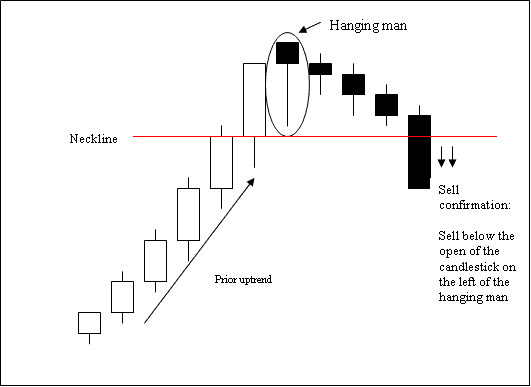
First of all, I am looking for a reversal candle stick. More specifically, I am looking for a hammer, inverted hammer, shooting star or hanging man in the candlestick daily chart. I trade these as they seem to have the highest rate of success in my experience.

Here are some examples of how they look like.


I use screeners to look for them daily. Click here to see which screeners I recommend using. After identifying a chart with a hammer, I order 1 cent above/below the high/low of the candle (depending on whether it is a short or long trade) for the next trading day.

My stop loss will be 1 cent above/below the high/low of the candle as well.


Here's an example. The neckline will be where I enter the trade.

My take profit will be the previous high or the support/resistance.

After identifying, my entry, stop loss and take profit, I will also check the RRR ratio and see if it qualifies. Currently, I am looking for trades that are at least more than 1. If it does, I will enter the position.

This is the basic strategy I am currently using. I will post a more detailed entry about my strategy where I will discuss ATR and position sizing so stay tuned!

What are your trading strategies? I would love to hear from you!

As always, happy trading.

Cheers. 

Saturday, 4 April 2015

What Makes A Good Trader?

When I started to trade equities, my first trade got me $60. It felt exciting, the adrenaline that surged through me for making money off the stock market made me feel invincible. The second trade brought in $30, not as much, but it was still a profit, so no complaints there.

The third, fourth and fifth trade all had a lost of about $250, each. That's a total of $750 net loss, not even factoring in commissions and other expenses.

At this point, what would you do? Accept the $750 loss as a lesson and never trade again? Start changing your strategy because it is obviously not working? 

Perhaps even start listening to what other people have to say and blindly follow their analysis. Even worse, start taking trades that you would never have taken or risk excessive amount of capital all in the hopes of recouping that lost. 


You are now thinking to yourself, "I should never have started trading, now I've lost money that could still be in the bank!"

Guess what, I stuck to my trading plan, ignored the losses (to the best of my ability!) and just took each trade as it came. In the following weeks, I made more than my losses to have a decent amount of profit.

So what am I driving at? 

Stick To A Trading Plan

Find a strategy that works for you and has been shown to be profitable in the long run and stick to it! Don't change it at the first sign of trouble. You'll never be able to make money like that. Sure, you could tweak the strategy after reviewing it periodically but definitely not from trade to trade.

Emotionless Trading

I have to admit, this was my biggest problem when I started. I always took trades that I would normally avoid after losing on a previous trade. I can honestly tell you, it only made me lose more money and it's a vicious cycle.

You should view each losing trade as an opportunity to learn from your mistakes. What went wrong? Did you miss out something? Note everything down so that you will not commit the same mistake twice.

If you can adopt this emotionless trading mentality, I'm sure your results will improve.

Discipline

You have to be disciplined! I'm not saying that you can read this and immediately start being a better trader, or even make more money. But you have to make it part of your trading philosophy. It takes patience to wait for the proper trade setup, to wait for a better opportunity to enter the market. Wait for high probability trades which I will discuss in the future so stay tuned for that!

Also, have the discipline to do your homework. I didn't learn all this overnight, it took me a lot of reading and up till now, I'm still learning. It never stops! So if you want to be better at this, you have to invest time and effort into doing your homework.

Risk Management

A good trader will know how much to risk and how to minimise it. You cannot eliminate risk, but you can mitigate it. Managing your risk is more important than profits. A few mistakes could easily wipe out all the profits that you have been accumulating for the past days, weeks, even months.

There will be times when your gut feeling tells you risk more because the setup is perfect. But always stick to what your risk management plan allows you to. If your plan tells you that the trade is beyond your risk appetite, then wait for a better day.

Remember, not making money beats losing money any time!

What do you think makes a good trader? Leave your thoughts in the comments section.

As always, happy trading.

Cheers.


What is Risk Reward Ratio?

From some of my previous post, you might have seen me mention the term "Risk Reward Ratio" (RRR).

What is this and why is it important to me?

Well, as the name implies, it is simply the ratio between the amount of money I am risking and the amount of money I could potentially earn. How do you know how much you will lose or earn? That is determined by your entry, stop loss and take profit levels. Click here if for more information about them.


Lets take the most recent shorting opportunity that I have identified as an example.

So how do we go about calculating the RRR?

1) We first calculate in absolute value of the potential loss.

$35.72 - $37.66 = $1.94

2) Then, we calculate the absolute value of the potential gain.

$32.64 - $35.72 = $3.08

3) Finally, we divide the potential gain with the potential loss.

$3.08/$1.94 = 1.587

So what does this figure mean?

Basically, for every $1 we are risking, there is a potential to earn $1.59. The higher the RRR ratio, the better. Everyone will have their own predefined level that they are comfortable with. Some might prefer a RRR ratio of 1.5 and above.

But a good rule of thumb is to avoid those that are below 1. It does not really make sense to risk $1 to potentially earn $0.60. We want our risk to be justified.

I hope this has helped you understand what the Risk Reward Ratio is all about.

What are your thoughts about RRR? Leave them in the comments below!

As always, happy trading.

Cheers.

Friday, 3 April 2015

What is Entry, Stop Loss & Take Profit?

What are all these mambo jumbo that you see on the charts? 
What is this indicator for? 
What in the world is the chart telling me? 
How can you tell where the price of a stock is heading based on the charts alone?

These were only a small fraction of the number of questions I had before I started trading. After reading a bunch of books about investing, surfing through countless sites and attending seminars which focused more on advertising their platforms rather than actually teaching me about trading, I came to a conclusion that trading is very subjective. There's no right way to trade or one magic formula you can apply to guarantee a 100% win rate.

But today I want to share with you what are "Stop-Loss" and "Take-Profits" and "Entry Price"

I have mentioned them before in previous post and some of you might be scratching your head wondering why are these price levels so important to me.

Entry Price

The entry price is the price that you set to enter the market, be it a long (anticipating the price to rise) or short (anticipating the price to fall) position. 

Take-Profit

This price level, TP for short, is the price level that you have determined to exit the market and take your profits. Before you even enter the market, you need to have a predefined plan as to when to exit. If not, you'll be entering the market without a goal in mind and this lack of objectivity could jeopardise your unrealised earnings. 

Stop-Loss

This price level, SL for short, is the price level that you have determined to exit the market with a loss. This level is more important than your TP because knowing where to cut your losses is more important than knowing when to take your profits.

Humans tend to take their profits to quickly and cut their losses too late. But when it comes to trading, it should in fact be the other way around. It's human behaviour, the point is to ensure that you are disciplined enough to make decisions not based on emotions and not let losses or greed affect how you trade. 

So, before even entering a trade. You should have these 3 price levels identified. The question now is how to identify them. That will be for another post.

As always, happy trading!

Cheers