Friday, 22 May 2015

What is Time Stop?

I've mentioned the term "Stop Loss" in previous post. It is a predefined price level at which you will cut your losses and move on to the next trade. It is an important concept that every trader should follow and be discipline about it.

But there is also another stop loss strategy that I use in my plan but have yet to have a chance to actually exercise it. The concept is known as "Time Stop".

You do not necessarily need to wait for the price to hit your stop loss price to get stopped out. Time stop is with regards to the duration of the trade. There will be some trades that hit your take profit level really quickly, like in a matter of days. But there will be some that will take like what seems forever.

If the trade is ranging around a certain price and not really doing anything, I will exit my position whether or not it is at a profit or loss. The opportunity cost of holding on to that position which is going nowhere exceeds the cost of exiting the position.

I usually give my trade a maximum of about 7 to 8 weeks for it to work itself, if it doesn't, then it is time to get out.

I personally have not had a chance to use to stop because my trades have never taken that long before. I will update you when it does so that I'll have a good example to show you.

As always, happy trading.

Cheers.

Wednesday, 20 May 2015

Monday, 18 May 2015

Sunday, 10 May 2015

Saturday, 9 May 2015

3 Invaluable Tips For Trading


Today I will be discussing 3 tips that I think would really change your trading success rate. I started out trading without utilising them and often entered bad trades, but after these minor tweaks, I was in a whole different world.

Tip #1: Don't Trade Immediately

I always trade 1 hour after the market has opened. For example, the NYSE opens at 9.30pm GMT+8 (Singapore Time) and the prices of the stocks will be fluctuating like crazy because of the big players such as investment banks are adjusting their positions.

So... why don't I trade these volatile periods? I always set an entry price for a trade. These volatility in the stock's price can cause me to enter a trade that isn't necessarily the true consensus of the market. Therefore, I always enter my order about 1 hour after the market has opened.

Tip #2: Don't Over Trade

When I first started out trading, I always felt like I had to take a position; I either had to be long or short. This made me enter a lot of trades that did not work out and that meant losing money. You have to realise that not trading is also taking a position. If you feel like the market is ranging or it is against your strategy, you can always choose to not trade and wait for a better opportunity to present itself. Choose to focus on a few good trades instead of having the need to enter every time an opportunity presents itself.

Not earning money beats losing money every time. 

Tip #3 Always Check Your Order

I don't really want to admit it, but a mistake as careless as this can cost you a lot of money. Always double check your order quantity (how many stocks you are going to buy) as well as the order price. Not only that, the other figures that are crucial is the stop-loss and the take-profit price and quantity. 

If for some reason you entered the wrong quantity, there is no one else to blame except yourself. The market isn't going to give you a chance because it was a careless mistake. You will have to bear that loss. I remember making that mistake once, and it was once too many. 

Say for example, you enter a trade at $11 for 1000 shares. You want to place a stop-loss price of $10 for 1000 shares. You enter $10 as the stop-loss price but you made the mistake of entering 100 shares due to carelessness. This means that if the market moves against you, you are supposed to lose a maximum of $1000. 

But since you entered 100 shares only, you lose $100 and the remaining loss will still be in your unrealised profit. If the market continues to move against you, your loss will be significantly more than $1000 dollars. 

Not only that, you incur more commission cost because each trade you take (buy/sell), you have to pay a certain amount of money. Lets say each transaction cost a minimum of $10. The trade above should cost you $20 in total (Buy and Sell). But because you entered the wrong quantity and have to sell it again, you will incur a total of $30 (Buy, Partial Sell, Partial Sell).

So you incur not only more loss, but more commission cost. Remember to ALWAYS check your order.

As always, happy trading.

Cheers.

Tuesday, 28 April 2015

Did You Trade AGO With Me?


Update: I have sold the other half of my position and I have a total profit of $694.60, hope you traded with me!

In one of my previous post, I mentioned a trading setup for AGO and yesterday night during the NYSE session, it finally hit my take profit of $26.63

It was an unrealised profit of $878. I have sold half my position to secure in about $440. I will be using the trailing-stop for the other half of my position.

This will be the first time I am implementing the trailing stop for equities and you can see that the most recent candle showed quite a bit of momentum. I will update you as this trade takes its place.

As always, happy trading.

Cheers.

Wednesday, 22 April 2015

Friday, 17 April 2015

Tuesday, 14 April 2015

Why Do 90% of Traders Lose Money?

You've probably heard this phrase and because of that, you felt that the stock market is against you. There are so many books out there about investing, why is it that so many people still make losses in the long run?

In my opinion, the books out there can only teach you the technical part of trading and investing. Just like the stuff I am studying in school. Everything I learn is considered knowledge and information. But what sets you apart is how you use this knowledge and apply it to the real world situation.

Secondly, people let their emotions get the better of them. Trading has a very psychological effect on humans. Greed and fear of losses affect how we trade, but in order to make money in the stock market. We have to ignore those human instincts and stick to our individual trading plan.

Now I am not saying that if you are a emotionless trader, that guarantees profit. The market will against you and it will do it often. What you have to do is to limit those losses and in the long run, you should make a profit. Even if you don't make money in the first month, you have to keep trading according to your plan!

I say this over and over again because I feel that it is the single most important advice I have ever received.


Some people get emotionally attached to their trades. They feel that they have a need to be right and they cannot accept the fact that the market has not moved in their favour. I am guilty of this at times. Sometimes the trade setup is perfect but yet, when I enter, the market decides to go in the opposite direction leaving me stranded in disbelief. (That's why stop losses are important!)

The last reason why traders lose money is due to the fact that they believe trading is simply gambling. Making money is as simple as pressing buy and sell and hopefully they are right. If this is the mindset you adopt, I suggest you stop trading and start gambling instead, you can save the brokerage fee. 

Do not let the title affect you when you trade. Ignore this statistic and just remember to.. you guessed it. STICK TO YOUR PLAN.

As always, happy trading.

Cheers.

Saturday, 11 April 2015

What Is My Trading Strategy?

I have received many question as to what is my trading strategy. Today, I will go through it while making sure that it is as simple to follow as possible. So without wasting any more time, here is my trading strategy.

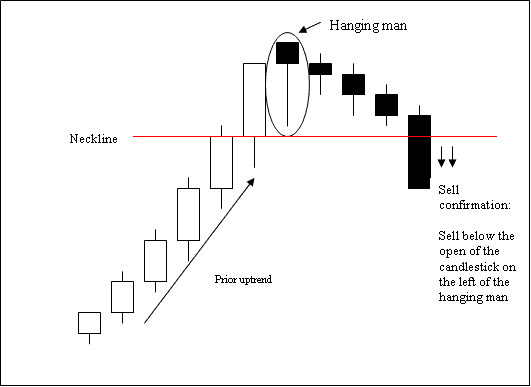
First of all, I am looking for a reversal candle stick. More specifically, I am looking for a hammer, inverted hammer, shooting star or hanging man in the candlestick daily chart. I trade these as they seem to have the highest rate of success in my experience.

Here are some examples of how they look like.


I use screeners to look for them daily. Click here to see which screeners I recommend using. After identifying a chart with a hammer, I order 1 cent above/below the high/low of the candle (depending on whether it is a short or long trade) for the next trading day.

My stop loss will be 1 cent above/below the high/low of the candle as well.


Here's an example. The neckline will be where I enter the trade.

My take profit will be the previous high or the support/resistance.

After identifying, my entry, stop loss and take profit, I will also check the RRR ratio and see if it qualifies. Currently, I am looking for trades that are at least more than 1. If it does, I will enter the position.

This is the basic strategy I am currently using. I will post a more detailed entry about my strategy where I will discuss ATR and position sizing so stay tuned!

What are your trading strategies? I would love to hear from you!

As always, happy trading.

Cheers.